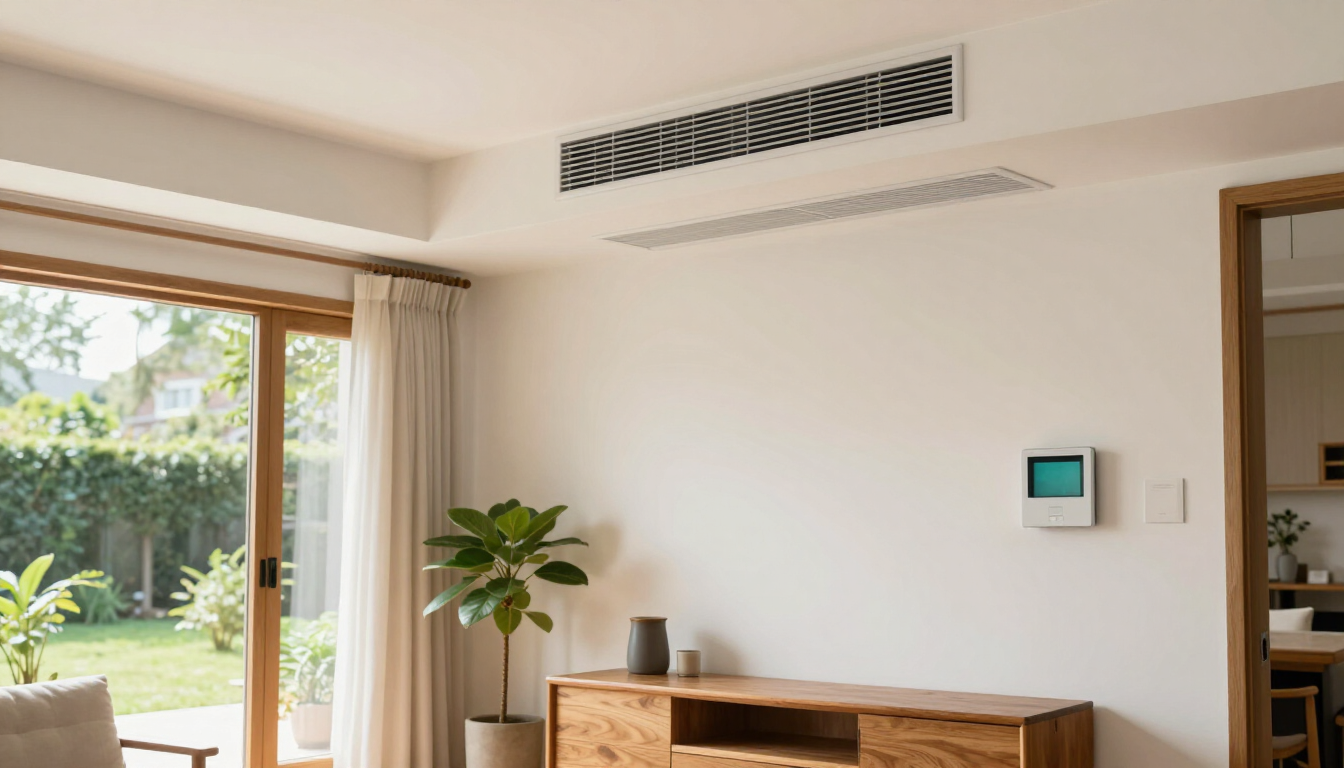
AC Repair vs. Replacement: When Is It Time to Upgrade?
June 22, 2026
The body content of your post goes here. To edit this text, click on it and delete this default text and start typing your own or paste your own from a different source.
Recent Posts

June 29, 2026
It is the peak of summer in East Tennessee. Temperatures are pushing 90 degrees, the humidity is thick enough to cut with a knife, and your air conditioner has been running relentlessly to keep your family comfortable. You notice the house is starting to feel a little warm, so you go to inspect the indoor unit. When you open the utility closet or check the outdoor condenser, you see something that makes absolutely no sense: a thick, solid layer of white ice completely encasing the copper pipes and metal coils. How can a machine freeze solid in the middle of a sweltering July afternoon? At Ashton Britt Service Company , frozen air conditioners are one of the most common emergency calls we receive during the summer months. While it looks bizarre, a frozen AC is a massive red flag that your system’s internal physics have been severely disrupted. If you are currently staring at a block of ice on your HVAC unit, here is the science behind why it is happening, what caused it, and the exact steps you need to take right now to prevent catastrophic damage. 1. The Science of the Freeze (Why It Happens) To understand why your air conditioner is freezing, you have to understand how it actually cools your home. Your AC does not "create" cold air; it acts as a massive heat sponge. The indoor evaporator coils are filled with ultra-cold, pressurized liquid refrigerant. Warm, humid air from your house is blown across these coils. The refrigerant absorbs the heat out of the air, and the newly cooled air is pushed back into your rooms. For this delicate thermal exchange to work, a constant, massive volume of warm air must constantly flow over the coils to keep the refrigerant above the freezing point. If anything disrupts that airflow, or if the refrigerant pressure drops, the temperature of the coils will plummet below 32 degrees. The natural humidity and condensation in the air will instantly flash-freeze upon contact with the metal, creating a snowball effect until the entire system is encased in a solid block of ice. 2. Cause #1: A Suffocating Dirty Air Filter This is the number one cause of a frozen air conditioner, and fortunately, it is the easiest to fix. Your air conditioner needs to breathe. If your return air filter is completely caked in a thick layer of dust, pet hair, and dander, it acts like a brick wall blocking the warm air from reaching the evaporator coils. Without that warm air to regulate the temperature, the coils freeze almost instantly. During peak East Tennessee summers, standard 1-inch fiberglass filters should be checked and replaced every 30 days. 3. Cause #2: A Chemical Refrigerant Leak This is a much more severe mechanical issue. The refrigerant (commonly known as Freon or R-410A) in your system operates inside a closed, sealed loop. An air conditioner never "uses up" or "burns" refrigerant. If your refrigerant level is low, it means you have a chemical leak somewhere in the copper lines. When refrigerant escapes, the pressure inside the system drops. According to the laws of thermodynamics, a drop in pressure causes a severe drop in temperature. The remaining refrigerant becomes far too cold, causing the moisture in the air to freeze to the coils. A professional HVAC technician must locate the leak with electronic detectors, seal it, and recharge the system to the manufacturer's exact specifications. 4. Cause #3: Caked-On Dirt and Grime on the Coils Even if your air filter is clean, the coils themselves can become incredibly dirty over the years. If the indoor evaporator coils are covered in a layer of sticky dust and grime, that dirt acts as a powerful insulator. The coils become physically separated from the warm air blowing across them. Because the refrigerant cannot absorb the heat through the blanket of dirt, the temperature drops, and the ice begins to form. This is exactly why routine, professional preventative maintenance and coil cleanings are so critical before the summer heatwave hits. What to Do Immediately (And What NEVER to Do) If you discover ice on your system, you must take immediate action to protect the incredibly expensive compressor. Step 1: Turn the AC OFF immediately. Do not try to force it to keep cooling. If the compressor tries to pump liquid refrigerant through a frozen solid line, it will literally tear itself apart, turning a simple repair into a $3,000 replacement. Step 2: Turn the Fan to "ON." Go to your thermostat and switch the fan setting from "Auto" to "On." This will force the indoor blower motor to continuously blow warm room air over the ice, accelerating the melting process. Step 3: NEVER scrape the ice. Do not take a screwdriver, an ice pick, or a knife to the coils to try and break the ice off. The copper and aluminum fins are paper-thin. If you puncture one, you will instantly vent all of your refrigerant into the atmosphere and destroy the coil entirely. You simply have to wait for it to melt naturally. Trust the Experts at Ashton Britt Service Company Once the ice has completely melted, the root cause of the freezing must be diagnosed and repaired before the system is turned back on. At Ashton Britt Service Company , we have over 20 years of experience diagnosing complex thermal and mechanical HVAC failures. Whether you need a simple professional coil cleaning or a complex refrigerant leak repair, our highly trained technicians will provide you with honest, transparent advice to get your home cooling safely again. We proudly serve homes and businesses across East Tennessee, including: Jefferson City, TN Morristown, TN Rutledge & Rogersville, TN Sevierville & Newport, TN Knoxville, TN Don't let a frozen AC ruin your summer comfort. Contact Ashton Britt Service Company today at (865) 475-0707 or visit our website to schedule your expert diagnostic assessment!

June 8, 2026
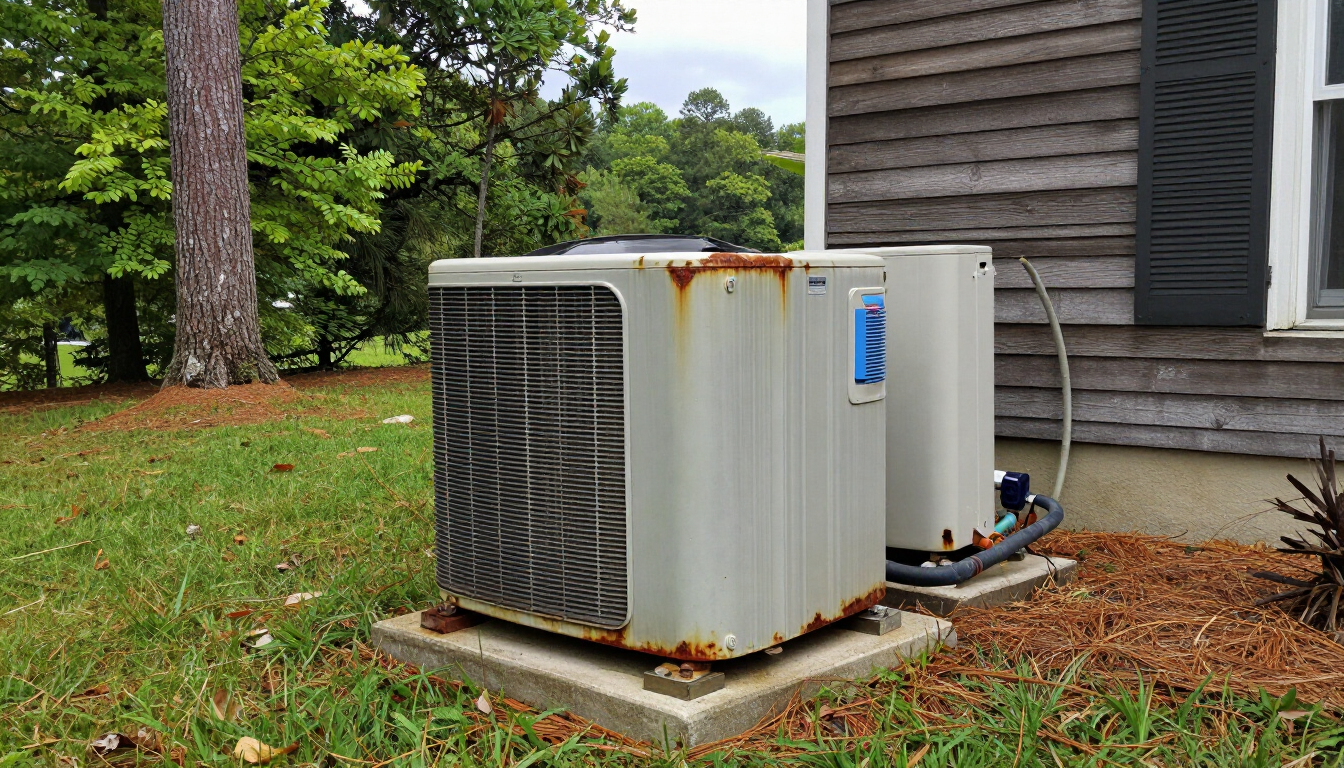
When the intense heat and heavy humidity of an East Tennessee summer settle in, a reliable air conditioner is not a luxury—it is an absolute necessity for your family's comfort and safety. We expect our cooling systems to work flawlessly at the push of a button, but like all complex mechanical machinery, an air conditioner has a finite lifespan. Deciding between repairing a struggling unit or investing in a brand-new system is one of the most stressful financial choices a homeowner can make. It is tempting to keep patching up an old system to delay the upfront cost of a replacement, but at a certain point, those continuous repairs become a massive financial drain. At Ashton Britt Service Company , we believe in providing honest, transparent advice so you can make the best decision for your home and your budget. Before you spend another summer sweating through a breakdown, here are the five clearest signs that it is officially time to replace your air conditioning system. 1. Your Air Conditioner is Over 10 to 15 Years Old Age is the most critical factor when evaluating an HVAC system. Even if you have been diligent about scheduling annual preventative maintenance, the internal components of an air conditioner undergo immense thermal and mechanical stress over the years. The Department of Energy generally recommends replacing an HVAC unit every 10 to 15 years. Once a system passes the decade mark, the compressor motor begins to wear down, electrical components degrade, and the coils become highly susceptible to microscopic refrigerant leaks. If your system is approaching or past this 15-year threshold, it is operating on borrowed time. Investing in a new system proactively allows you to research your options rather than making a panicked decision during an emergency breakdown in July. 2. The Cost of Repairs is Adding Up (The 5,000 Rule) A minor repair like replacing a worn-out capacitor or a blown fuse is a standard part of homeownership. However, if you are calling an HVAC technician multiple times a season to fix a frozen coil, top off refrigerant, or replace failing blower motors, you are throwing good money after bad. A great industry guideline to use is the "5,000 Rule." Multiply the age of your equipment by the estimated cost of the repair. If the total exceeds 5,000, replacing the unit is the smarter financial move. For example, if your system is 10 years old and requires a $600 repair (10 x 600 = 6,000), you should highly consider putting that $600 toward a high-efficiency replacement rather than sinking it into a dying machine. 3. Skyrocketing Monthly Energy Bills As air conditioners age, they slowly lose their mechanical efficiency. Motors have to work harder to push air, compressors run longer to achieve the same cooling capacity, and the system begins to consume significantly more electricity. If your utility rates have remained relatively stable but your summer energy bills have inexplicably doubled over the last few years, your aging AC is the likely culprit. Today’s modern air conditioning systems are engineered with advanced, variable-speed technology and boast SEER (Seasonal Energy Efficiency Ratio) ratings that drastically outperform older models. Upgrading to a new, energy-efficient system can easily slash your monthly cooling costs by 20% to 40%, allowing the unit to partially pay for itself over its lifespan. 4. Uneven Cooling and Poor Humidity Control Does your living room feel like a freezer while your upstairs bedrooms feel like a sauna? An aging or incorrectly sized air conditioning system will struggle to push conditioned air evenly throughout your home's ductwork. Furthermore, your AC does more than just lower the temperature; it is actively responsible for pulling excess humidity out of the air. East Tennessee summers are incredibly humid, and if your home constantly feels sticky, clammy, or smells musty, your air conditioner is failing to dehumidify the space. A new system will restore a balanced, crisp, and comfortable climate to every single room in your house. 5. Your System Still Uses R-22 Freon If your air conditioner was installed before 2010, there is a very high probability that it utilizes R-22 refrigerant (commonly known as Freon). Due to its severe environmental impact, the Environmental Protection Agency (EPA) officially banned the production and importation of R-22 in the United States in 2020. Because it is no longer being manufactured, the limited remaining supply of R-22 is astronomically expensive. If your older system develops a leak and requires a refrigerant recharge, the cost of the R-22 alone can easily exceed $1,000. Upgrading to a modern system that uses the environmentally friendly and highly accessible R-410A (or the newer R-454B) refrigerant will protect you from these massive, unexpected recharge bills. Upgrade Your Comfort with Ashton Britt Service Company Replacing your home’s cooling system is a major investment, but it shouldn't be an overwhelming experience. You need a trusted local partner who will properly calculate your home's cooling load, recommend the perfect equipment, and execute a flawless installation. At Ashton Britt Service Company , we pride ourselves on exceptional craftsmanship and transparent pricing. We ensure your new system is installed precisely to manufacturer specifications, guaranteeing you decades of reliable, energy-efficient comfort. We proudly serve homeowners and businesses across our expansive East Tennessee service area: Jefferson County: Jefferson City, Dandridge, New Market, Strawberry Plains, Talbott, White Pine Hamblen County: Morristown, Talbott, Whitesburg, Russellville, Bulls Gap Grainger County: Rutledge, Bean Station, Washburn, Thorn Hill Hawkins County: Rogersville, Mooresburg Sevier County: Sevierville, Kodak, Pigeon Forge, Gatlinburg, Townsend Cocke County: Newport, Cosby, Del Rio, Parrottsville Greene County: Greenville, Mosheim Knox County: Knoxville & Surrounding Areas Stop wasting money on an inefficient, failing air conditioner. Schedule your free system replacement estimate and experience true, reliable comfort this summer!

June 1, 2026
Living in East Tennessee means experiencing the full spectrum of extreme weather. From the humid, sweltering heat of peak summer to the bitter, freezing nights of winter, your home’s climate control system is constantly working to keep your family comfortable. Because an HVAC system operates largely out of sight, it is incredibly common for homeowners to adopt an "out of sight, out of mind" approach. Many people only call an HVAC technician when the air conditioner completely stops blowing cold air or the heater fails in the middle of January. However, waiting for a catastrophic failure is the most expensive and stressful way to manage your home. Just like your vehicle requires regular oil changes to run smoothly, your heating and cooling equipment requires professional, preventative maintenance. At Ashton Britt Service Company , we believe proactive care is the key to lasting comfort. Here are four reasons why annual HVAC maintenance is a non-negotiable investment for your home. 1. Drastically Lower Your Monthly Energy Bills When an HVAC system is neglected, it has to work significantly harder to produce the same amount of heating or cooling. Dust buildup on the evaporator coils acts as an insulating barrier, blocking heat transfer. A clogged filter suffocates the blower motor, and low refrigerant levels force the compressor to run non-stop. All of this extra mechanical strain translates directly into wasted electricity. A professional maintenance tune-up involves deep cleaning the internal components, calibrating the thermostat, and lubricating moving parts so the system operates at peak efficiency. This optimized performance can easily shave 15% to 20% off your monthly utility bills. 2. Prevent Expensive, Emergency Breakdowns There is never a convenient time for an AC repair or a heating repair , but breakdowns almost always happen during the most extreme weather of the year when the system is under the most stress. During an annual tune-up, an experienced technician acts as a mechanical detective. We inspect the electrical connections, test the capacitors, and measure the amp draw of the motors. By identifying and replacing a weakened $30 part in the spring, we can prevent a $1,500 compressor failure from happening in the dead of summer. Preventative maintenance is all about fixing the small issues before they snowball into major emergencies. 3. Extend the Lifespan of Your Equipment Installing a new central air and heating system is a massive financial investment. If you want that investment to last for 15 to 20 years, you have to take care of it. When a system runs while dirty or out of balance, the internal components experience accelerated wear and tear. Motors burn out faster, and moving parts grind against each other. Regular maintenance mitigates this friction, ensuring your equipment reaches its maximum engineered lifespan, delaying the hefty cost of a total system replacement for as long as possible. 4. Improve Your Indoor Air Quality Your HVAC system breathes the same air your family does. If your ductwork, blower motor, and coils are covered in years of accumulated dust, pet dander, and microscopic pollen, that debris is being actively circulated through your vents every time the system kicks on. If anyone in your home suffers from allergies or asthma, regular maintenance is vital. A professional cleaning removes this trapped biological matter, drastically improving the quality of your indoor air and creating a cleaner, healthier living environment. Schedule Your Tune-Up with Ashton Britt Service Company Stop crossing your fingers and hoping your system makes it another harsh Tennessee season. Proactive maintenance pays for itself by lowering energy costs, preventing emergency repairs, and extending the life of your equipment. Ashton Britt Service Company provides comprehensive, multi-point inspections and transparent, honest service. We proudly ensure year-round comfort for families and businesses across our expansive East Tennessee service area: Jefferson County: Jefferson City, Dandridge, New Market, Strawberry Plains, Talbott, White Pine Hamblen County: Morristown, Talbott, Whitesburg, Russellville, Bulls Gap Grainger County: Rutledge, Bean Station, Washburn, Thorn Hill Hawkins County: Rogersville, Mooresburg Sevier County: Sevierville, Kodak, Pigeon Forge, Gatlinburg, Townsend Cocke County: Newport, Cosby, Del Rio, Parrottsville Greene County: Greenville, Mosheim Knox County: Knoxville & Surrounding Areas Don't wait for your system to fail. Schedule your preventative maintenance tune-up and experience the peace of mind that comes with a perfectly calibrated HVAC system!

May 25, 2026
In East Tennessee, the weather can swing wildly from week to week. Between freezing winter nights and sweltering, humid summer afternoons, your home's climate control system works overtime to keep your family comfortable. Because these units operate quietly in the background, it is incredibly easy to take them for granted—right up until the moment they stop working entirely. Most homeowners assume an HVAC system is fine as long as air is blowing out of the vents. Unfortunately, waiting for a total system failure is the most expensive and uncomfortable way to manage your property. Long before your unit officially breaks down, it will start showing subtle signs of mechanical stress and inefficiency. Catching these red flags early allows you to schedule targeted maintenance, saving you from the stress of emergency breakdowns and significantly extending the lifespan of your equipment. At Ashton Britt Service Company , we prioritize keeping your system running smoothly year-round. Here are the clear indicators that your home is overdue for professional attention. 1. Weak or Inconsistent Airflow When you place your hand over a vent while the system is running, the airflow should be robust and steady. If you notice weak air pressure, or if some rooms in your house feel drastically different in temperature than others, your system is struggling to distribute air. This issue can stem from several sources. It might be as simple as a clogged air filter suffocating the blower motor, or it could be a sign of failing compressor components or leaky ductwork. Ignoring weak airflow forces your unit to run significantly longer to reach the target temperature, rapidly driving up your monthly energy bills. 2. Strange and Unpleasant Odors Your vents should push out clean, neutral-smelling air. If you suddenly notice strange odors permeating your home when the system kicks on, it is an immediate call to action. A Musty or "Dirty Sock" Smell: This is a strong indicator of mold or mildew growing inside your ductwork or on the evaporator coils. This drastically reduces your indoor air quality and requires professional cleaning. A Burning or Electrical Smell: If you smell burning plastic or an electrical odor, turn off your unit immediately. This often means a motor is overheating, wire insulation is melting, or a mechanical component has seized. Continuing to run the system in this state can cause catastrophic, unrepairable damage. 3. Loud and Unusual Noises While older units might have a noticeable hum, modern systems are designed to operate quietly. If your equipment starts making aggressive noises, it is crying out for professional AC repair or heating repair . Grinding or Squealing: This typically points to a failing fan motor or a worn-out belt that needs immediate replacement before it snaps. Banging or Clanking: Often caused by a loose internal part—like a fan blade or a motor mount—that is aggressively hitting other components while spinning. Hissing or Bubbling: This usually indicates a dangerous refrigerant leak. A system cannot cool properly without the correct level of refrigerant, and trying to run it empty will destroy the compressor. 4. Frequent Cycling (Turning On and Off Rapidly) Your system is designed to run in complete cycles, gradually bringing your home to the desired temperature before resting. If your unit turns on, runs for only two or three minutes, and abruptly shuts off, it is experiencing "short-cycling." Short-cycling prevents your home from ever reaching a consistent temperature and fails to remove excess humidity from the air. More importantly, the start-up phase is the most strenuous part of an HVAC cycle. Rapidly turning on and off puts immense strain on the electrical components and the compressor, leading to premature burnout. The Ashton Britt Service Company Approach When your comfort system starts showing signs of struggle, you need a dependable team that understands the mechanical complexities of modern units. Ignoring these warning signs won't make them go away; it will only make the eventual repair bill much higher. Ashton Britt Service Company is dedicated to providing honest diagnostics and reliable solutions. We don't believe in quick fixes that fail a week later. Our technicians dive deep into your system to locate the root cause of the inefficiency, restoring your equipment to its absolute peak performance. Secure Your Home’s Comfort Stop living with uneven temperatures, high energy bills, and the constant worry of a breakdown. If your system is struggling to keep up with the Tennessee weather, it is time to bring in the experts. We proudly provide premium home comfort services across the region, including: Jefferson City, TN Morristown, TN Sevierville, TN Grainger county, TN Cocke County, TN Knocksville, TN Take control of your indoor climate today. Visit www.ashtonbritt.com to schedule your comprehensive system evaluation and experience dependable comfort all year long!